
WIKIUNSEEN

Wiki Unseen is more than a project — it is a promise.
A promise to show the world the people who have shaped the world, but were systematically erased from knowledge spaces. People whose images were taken out of the picture. <br><br>With Wiki Unseen, our goal is to redraw those within the global majority — including Black people, people of color, and Indigenous peoples — back into history, one image at a time.
Wiki Unseen is more than a project — it is a promise.
In collaboration with <a href=”#”>Behance</a> and <a href=”#”>AfroCrowd</a>, we are inviting artists from diverse backgrounds to illustrate scientists, activists, poets, and pioneers who are not visually represented on Wikipedia. Their images are either missing from history entirely, or they are locked behind restrictive paywalls and licenses. We will release each new artwork here, on the Wiki Unseen gallery, all throughout Black History Month and beyond. <br> <br> With the support of our volunteers, we aim to share these new images on Wikipedia, making them available for everyone, everywhere. Because that is what free knowledge is about. Learn how you can become part of this initiative.
Unseen facts:
- Only <a href=”#”>35.4%</a> of biographies on English Wikipedia have images.
- <a href=”#”>Wikipedia articles with images receive more traffic compared to those without images.</a>
Who do you picture when you think of an astrophysicist??
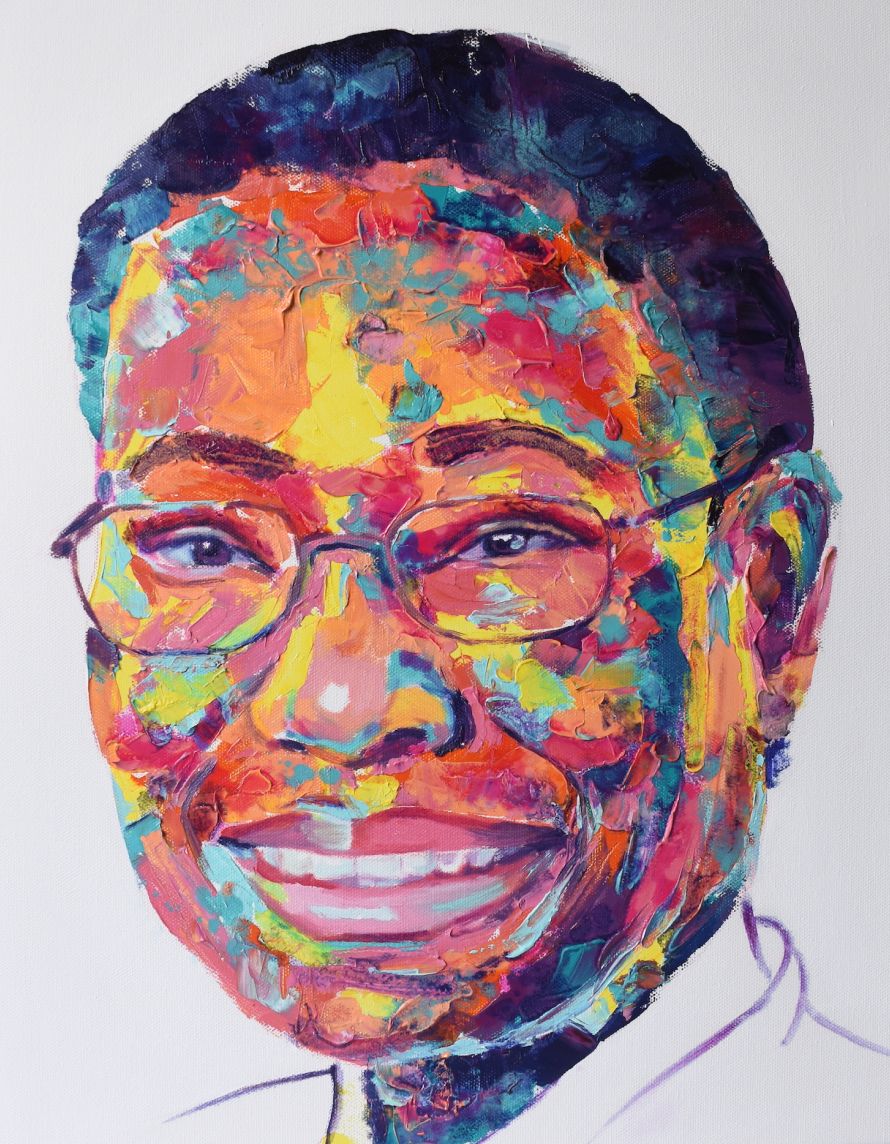

See the woman who made her own space.
<b>Mercedes Tharam Richards</b>(<a href=”#”>Kingston,</a> 14 May 1955 – <a href=”#”>Hershey</a>, 3 February 2016), née Davis, was a Jamaican <a href=”#”>astronomy</a> and <a href=”#”>astrophysics</a> professor. Her investigation focused on <a href=”#”>computational astrophysics</a>, stellar astrophysics and <a href=””>exoplanets</a> and <a href=”#”>brown dwarfs</a>, and the physical dynamics of interacting binary stars systems. Her most known work is her pioneering research in the tomography of interacting binary star systems and cataclysmic variable stars to predict magnetic activity and simulate gas flow.